


Explore premium glass options for European windows, doors, and facade systems, including insulated glass units, double glazing, triple glazing, Low-E glass, solar-control glass, acoustic glass, laminated safety glass, tempered glass, and impact-resistant configurations..
The right glass package can improve comfort, energy efficiency, noise reduction, safety, security, daylight control, and long-term performance. Windorama helps homeowners, architects, builders, and developers choose glazing solutions based on project goals, climate, design, safety requirements, and budget.
Glazing Technologies
Different glazing packages provide different levels of comfort, energy efficiency, solar control, sound reduction, and safety. From basic single-pane glass to advanced multifunctional triple-pane insulated glass units, the right glass package can significantly improve how a window, door, or facade system performs in real-life conditions.
Below are the most common glazing technologies used in residential and commercial projects, explained in a clear way so homeowners, builders, architects, and developers can compare the options more easily.
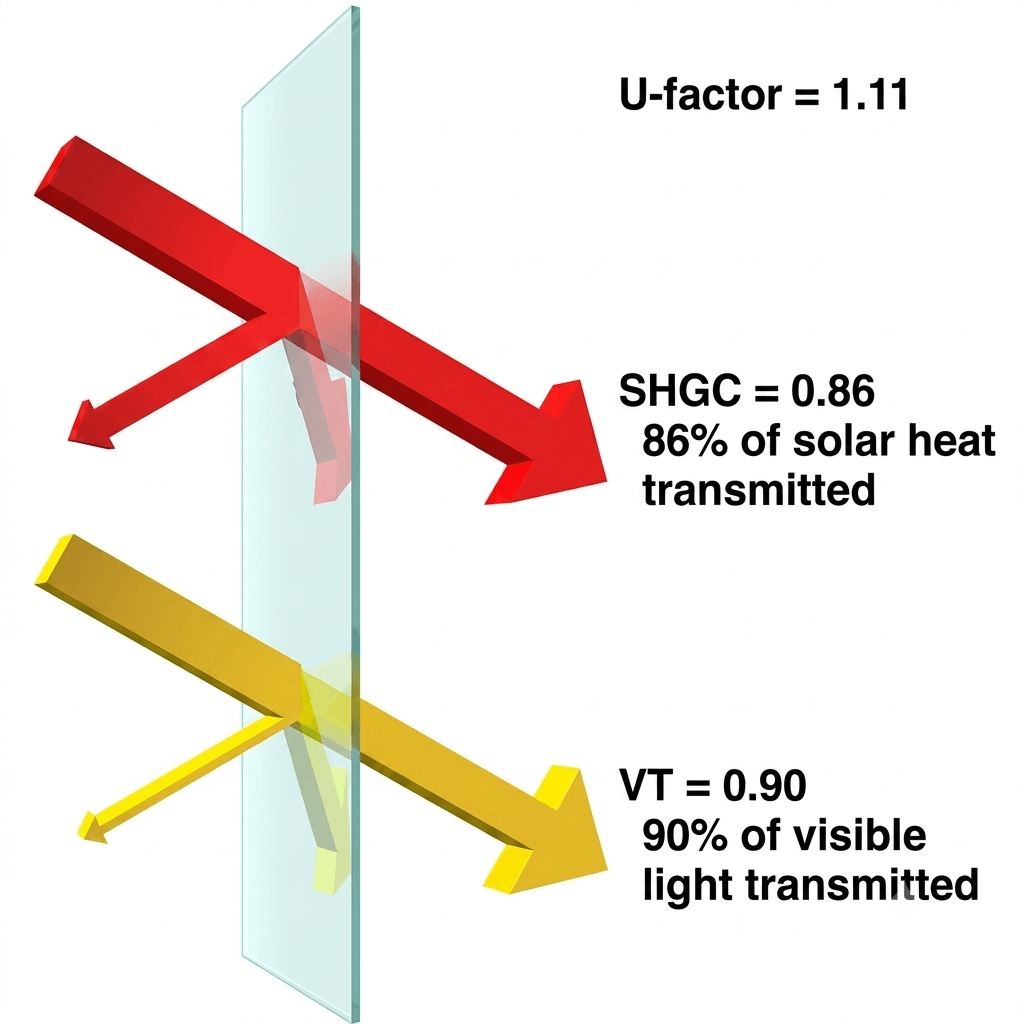
Single-Pane Clear Glass
While single-pane glazing represents a traditional approach, it is primarily reserved for specialized interior applications in modern architecture. Consisting of a single sheet of glass, it provides minimal thermal insulation and acoustic control, making it unsuitable for the rigorous energy efficiency and comfort standards required in premium exterior residential or commercial projects
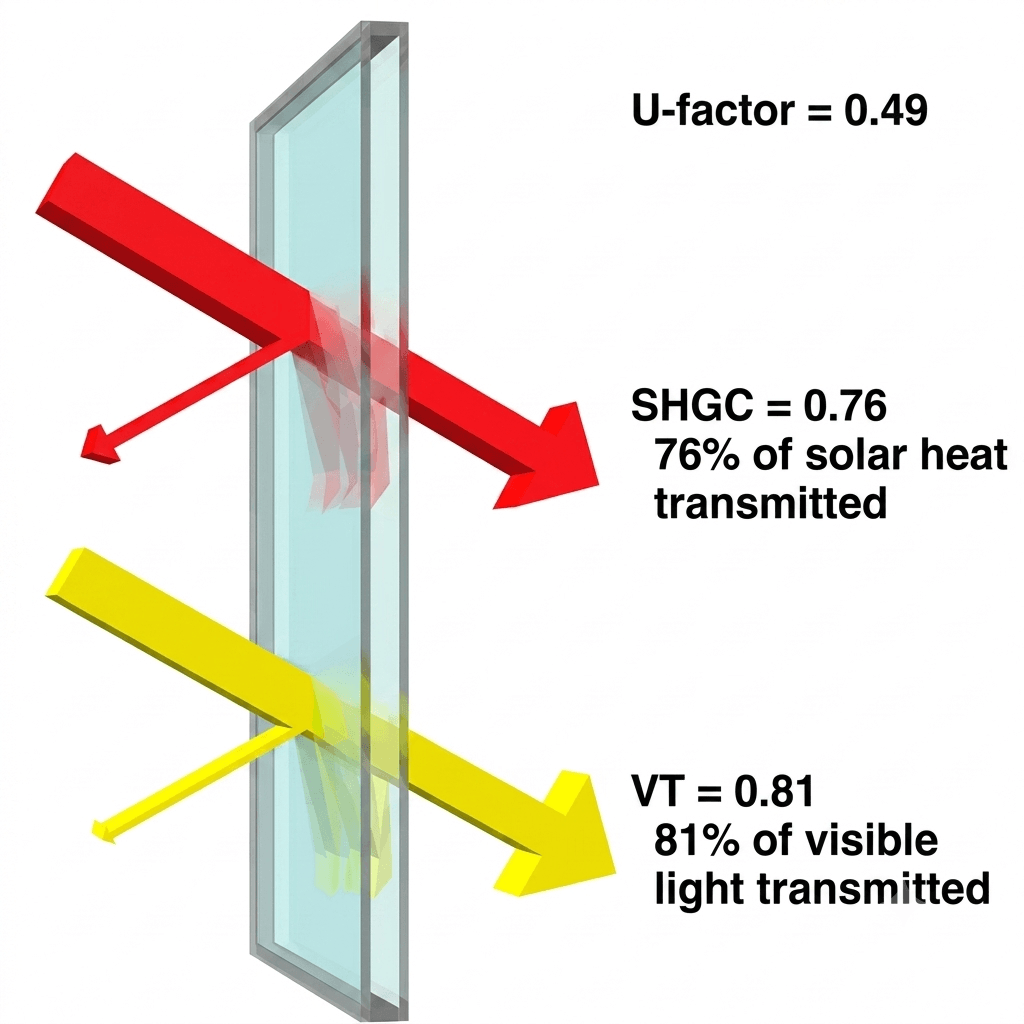
Double-Pane Clear Glass
Double-pane glass uses two panes separated by an air space. It provides better insulation than single-pane glass and is a basic upgrade for comfort, energy performance, and noise reduction. Double-pane clear glass cuts U-Value of a single pane in half and increases R-Value two-fold.
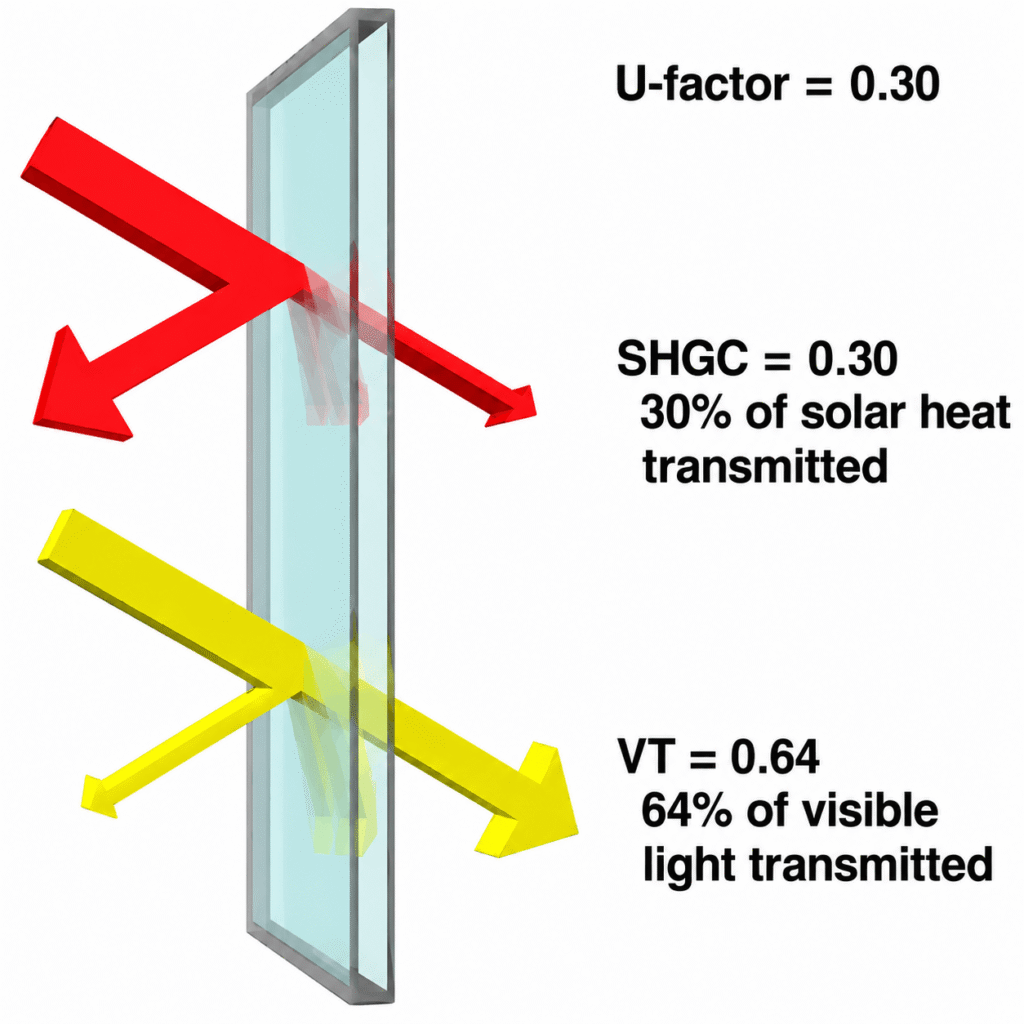
Double-Pane Low-E Argon Glass
This insulated glass unit combines two glass panes, Low-E coating, and Argon gas fill to improve thermal performance, reduce heat transfer, and support better year-round comfort.
Double-pane glass with Low-E Argon gas has low U-Values between 0.25 and 0.30 and R-Value of 4. This is a quadruple increase in energy efficiency over a single-pane window.
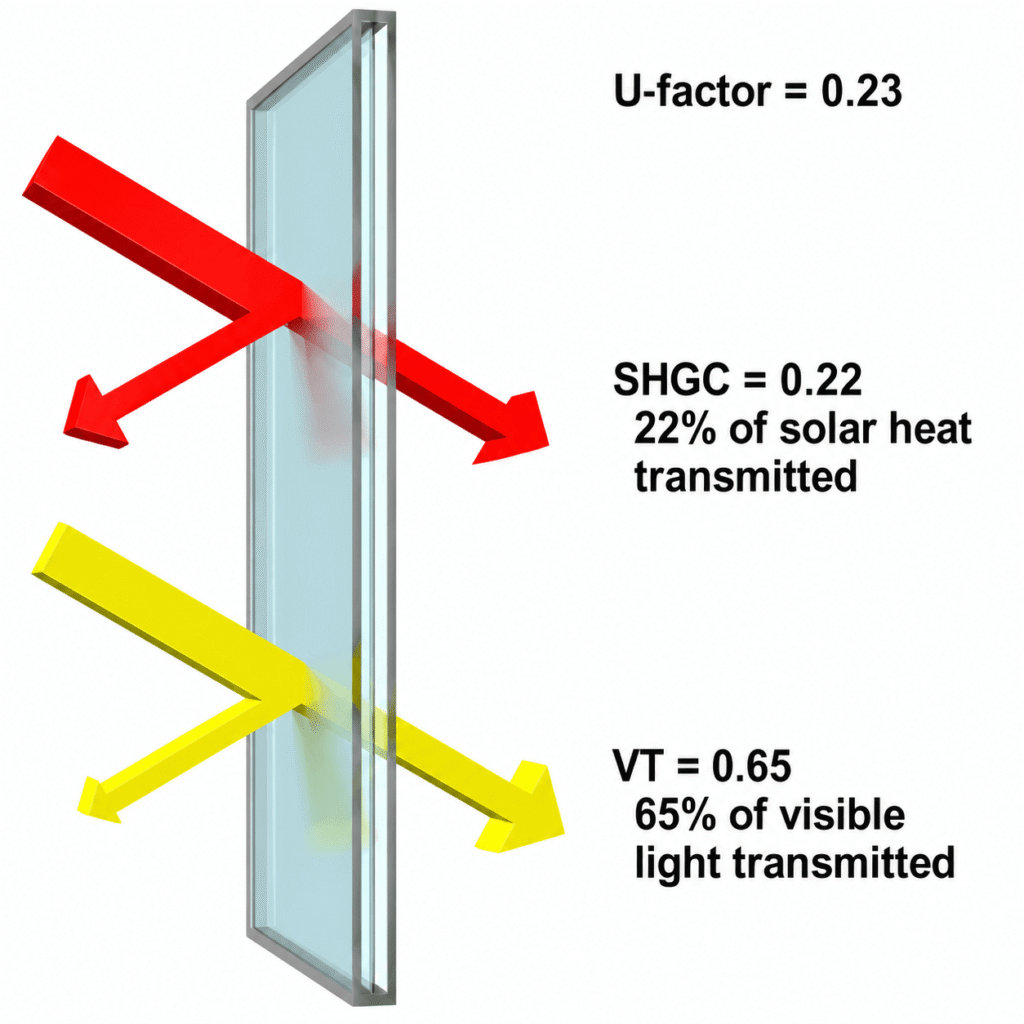
Triple-Pane Low-E Argon Glass
Triple-pane glass adds a third pane for higher insulation, better sound reduction, and improved indoor comfort.
With Low-E and Argon gas is a high-performance glass with U-Values between 0.19 and 0.23 and R-Value around 5. This is a 20-30% improvement in energy efficiency over double-pane glass with Low-E Argon, and a whopping 500% over single pane clear glass.
Multifunctional Triple-Pane Glass
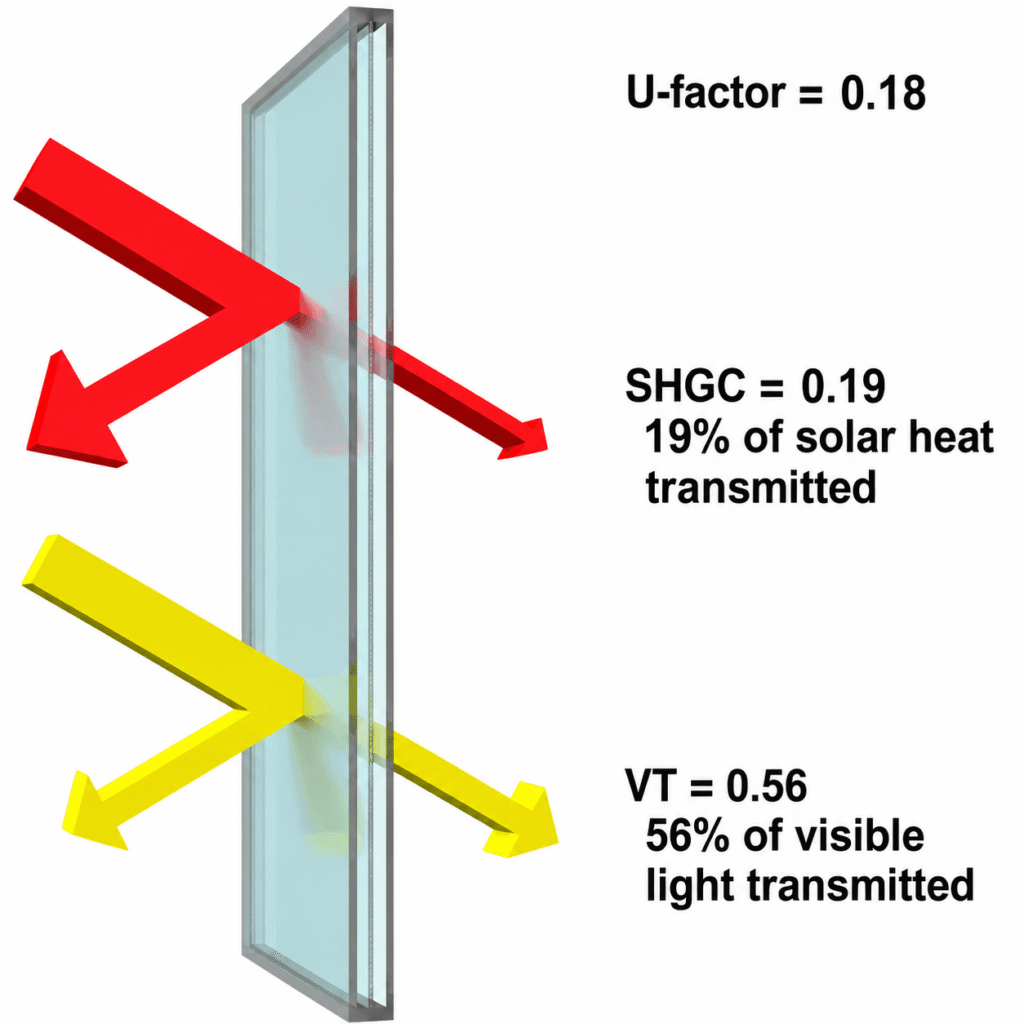
A premium glass package with Low-E coating and Argon gas fill on the interior side to help retain indoor heat in winter and Solar-control coating on the exterior side to reduce solar heat gain in summer.
How To Read Numbers On the Labels
U-Factor
U-Factor, often called U-Value, is the number that represents the loss of heat. The lower the number the less heat will escape through the window and the more energy efficient the window is. There are 2 ways to measure U-Factor: the center of the glass (COG), and whole window. NFRC requires that U-Factor of entire window is displayed on the label. Some glass manufacturers rely only on the center of the glass in their marketing efforts. This approach always yields superior performance ratings, because the warmest part of a window is center of the glass and the coldest parts are edges of the window glass. So be careful when comparing different windows. Make sure you compare apples to apples. Always use NFRC label to determine U-Factor of entire window, not just U-Factor of the center of the glass.
SHGC
SHGC – Solar Heat Gain Coefficient is the number that represents the fraction of solar radiation that passes through the window. UV rays from the Sun are responsible for shading carpets, fabrics, floors, and furniture. Infrared radiation is responsible for rooms getting hotter in the summer. The lower the SHGC the less UV energy is transmitted through the window. So look for the window with the lowest number.
Condensation Resistance
This number measures how well a window resists the formation of condensation on the interior surface. Condensation resistance is expressed as a number between 1 and 100. The higher the number the greater window’s condensation resistance.
VT – Visible Transmittance
VT – Visible Transmittance is the amount of light that enters your home. LowE coatings have only slight effect on Visible Transmittance.
R-Value
The number that is not displayed on the NFRC label is R-Value. R-Value is similar to U-Value in the respect that they both measure window’s insulating performance. The only difference is that U-Value measures window’s heat transfer and R-Value measures heat resistance. Remember, the lower the U-Value the more energy efficient the window is. The higher the R-Value the more energy efficient the window is. Typically energy efficient vinyl windows have U-Values between 0.15 and .30, and R-Values between 1 and 10.
Multifunctional / Solar-Control Glass
Multifunctional glass combines thermal insulation with solar-control performance. It helps reduce overheating from direct sunlight while maintaining natural daylight, making interiors more comfortable and reducing the load on cooling systems during warmer months.
This glass option is especially useful for large windows, panoramic openings, sliding doors, sun-exposed elevations, glass facades, and modern homes with expansive glazing.
Acoustic Glass
Acoustic glass is designed to reduce outside noise and create a quieter, more comfortable interior environment. It can be especially useful for homes and buildings located near busy streets, highways, airports, commercial zones, schools, or other high-noise areas.
By combining different glass thicknesses, laminated layers, and insulated glass unit configurations, acoustic glazing helps improve sound control while maintaining natural light, energy performance, and clean architectural design.
Safety Glass Options
Different glass types perform differently when broken. Choosing the right safety glass can improve protection, reduce injury risk, and support better long-term performance for windows, doors, facade systems, storefronts, and large glazed openings.
Triplex | Impact Glass
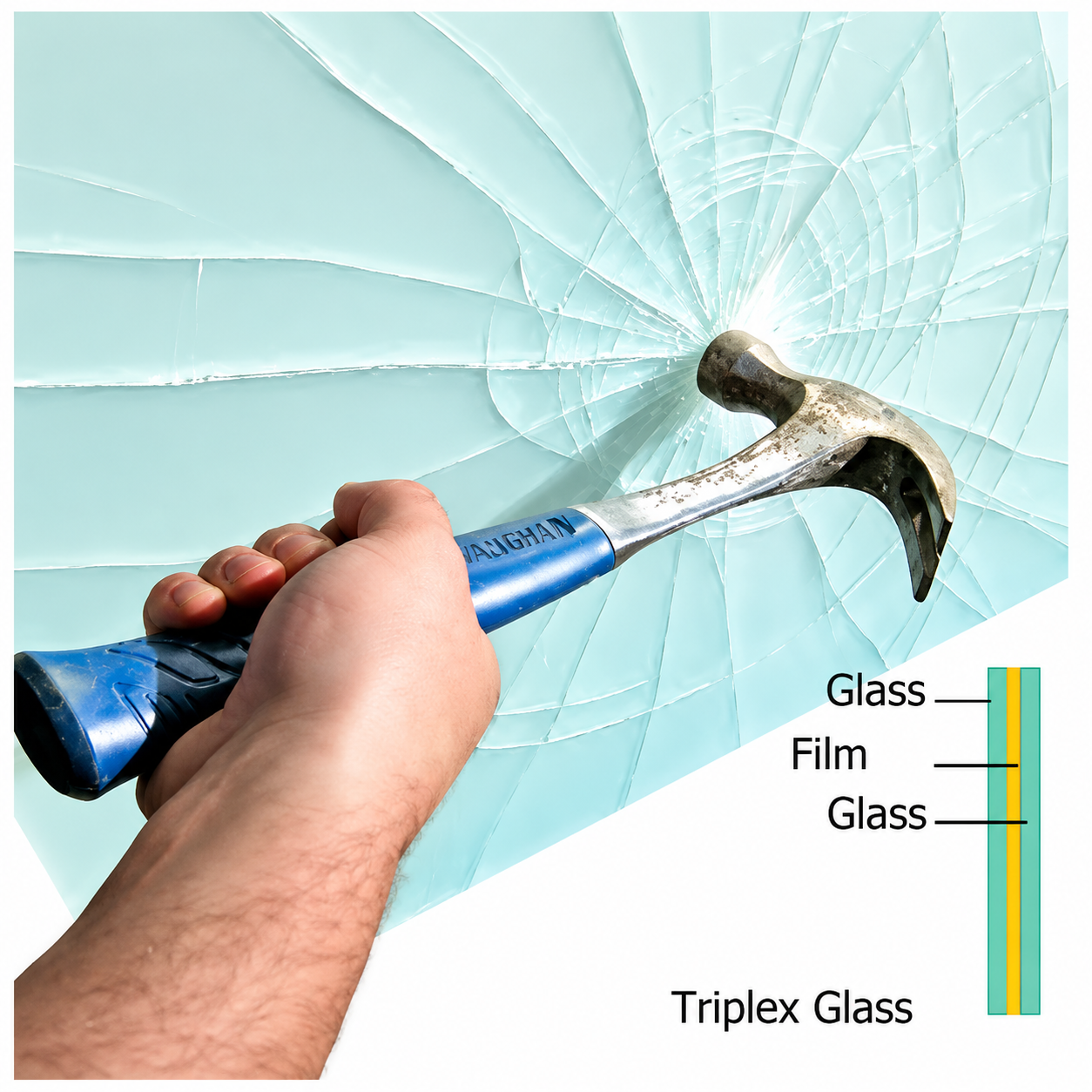
Laminated safety glass, also known as triplex glass, is made from multiple glass layers bonded together with a protective interlayer. If the glass breaks, the interlayer helps hold the fragments in place instead of allowing sharp pieces to scatter.
This makes laminated glass a strong option for doors, large windows, family homes, storefronts, commercial spaces, and projects where safety, security, and impact resistance are important.
Tempered Glass
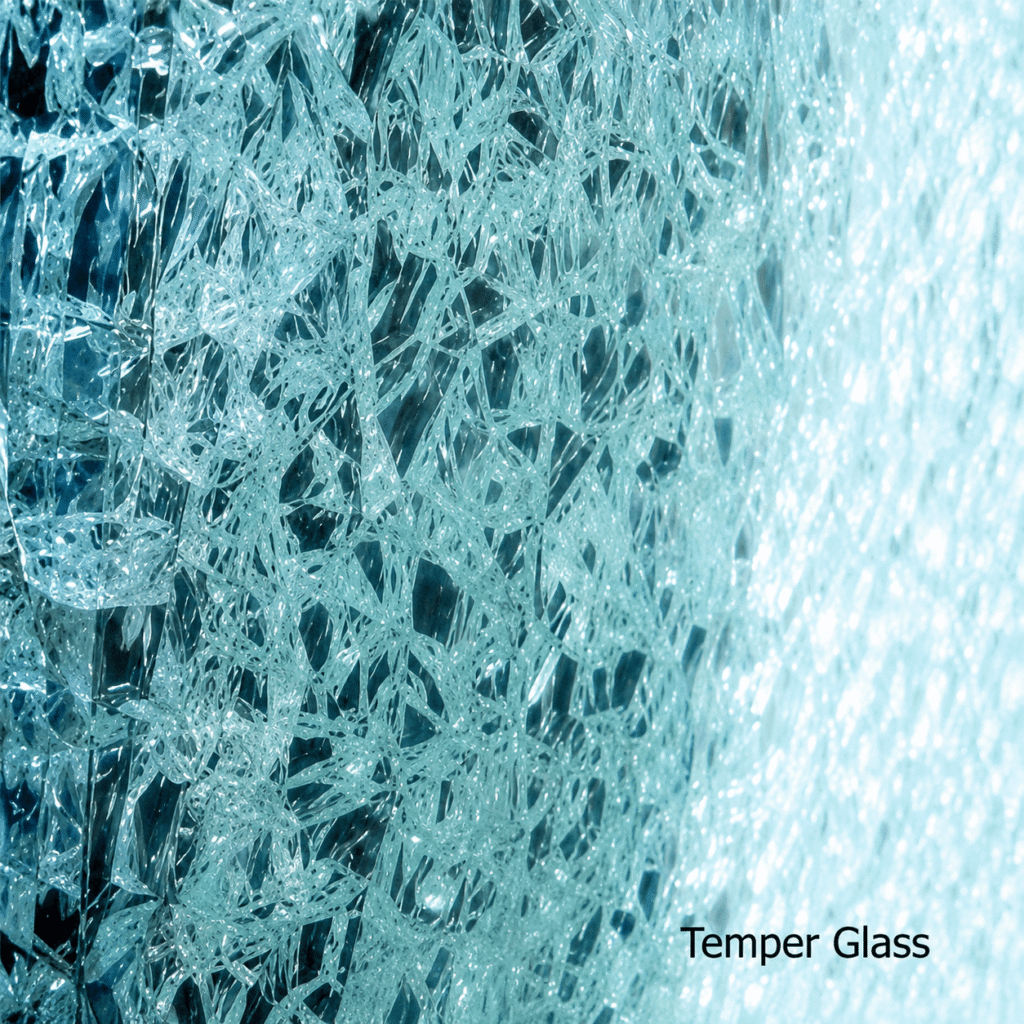
Tempered glass is heat-treated to increase strength and durability compared to standard glass. When broken, it shatters into smaller pieces, reducing the risk of large sharp shards.
This glass option is commonly used for doors, large window panels, commercial openings, interior glass partitions, and other applications where stronger and safer glazing is needed.
Standard Glass

Standard glass can break into large sharp pieces and is generally not the preferred option where safety, impact resistance, or security are important.
Warm Edge Spacers
Warm edge spacers are used inside insulated glass units to reduce heat transfer around the edge of the glass. This helps improve overall thermal performance, reduce condensation risk, and support better comfort near the window surface.
This detail is especially important for high-performance European windows, doors, and facade systems where energy efficiency, durability, and long-term glazing performance matter.
Advanced IGU Sealing & Corner Connectors
Advanced insulated glass unit sealing helps protect the edge of the glass package from air and moisture infiltration. Proper sealing is important for long-term durability, thermal performance, condensation resistance, and the overall reliability of the window or door system.
Corner connectors and spacer-frame details support a cleaner, more consistent glass unit assembly, especially in high-performance European windows, doors, and facade applications.
Need Help Choosing the Right Glass Package?
Every project has different performance needs. Windorama can help you compare glass options based on energy efficiency, sound control, safety, security, design goals, and budget.
Send us your project details, drawings, measurements, or photos, and our team will help recommend the right glazing solution for your windows, doors, or facade system.